Scientists at the National Center on Complex Processing of Mineral Raw Materials of the Republic of Kazakhstan have proposed an innovative solution for the selective extraction of rhenium, one of the rarest and most expensive metals, widely used in the aviation and space industries, petrochemicals, and electronics.
A distinctive feature of the new technology is its ability to work with process solutions obtained from recycled materials. Such solutions contain significant amounts of organic impurities, significantly complicating the processing process.
As Associate Professor Feruza Berdikulova explained, traditional ion-exchange resins used globally extract rhenium along with organic matter. As a result, the sorbents quickly become "poisoned," lose effectiveness, and require frequent replacement, dramatically increasing the cost of the process.
A Unique Kazakh Development
As an alternative, the center's specialists proposed a composition of carbon sorbents of mineral and plant origin. The technology has been successfully tested in a pilot plant using a cascade of sorption columns connected in series.
Tests were conducted on actual solutions from copper production lead cake leaching. The rhenium content varied from 40 to 460 mg/dm³, and the organic impurity content from 46 to 760 mg/dm³. The results confirmed high efficiency: the recovery rate of the target metal exceeded 90%. Furthermore, it was possible to achieve precise, selective separation of rhenium and organic compounds.
Project manager, Professor Svetlana Efremova, emphasized the key feature of the development:
"Our approach is comprehensive. At all stages of the process chain—from the production of rhenium-containing solutions to the release of finished products—recycled resources are used to the maximum extent possible. Moreover, some of the waste possesses the necessary functional properties and is used without additional processing. This allows for significant cost reductions."
Useful by-products
One of the key advantages of the technology is the production of valuable by-products. In particular, the silicate solution formed during the production of active carbon sorbent can successfully replace commercial liquid glass in the production of high-temperature materials.
Professor Baimakhan Satbaev noted:
"The developed composition allows for the production of lightweight materials with high thermal stability, capable of withstanding numerous heating and cooling cycles."
Testing of these materials was conducted at the furnace section of the Zh. Abishev Chemical-Metallurgical Institute under the supervision of Professor Alibek Baisanov. The results confirmed their potential for use as an internal lining and thermal insulation layer for industrial furnaces.
Young Scientists and International Recognition
Young researchers Nurgali Shalabayev and Askhat Kablanbekov, who are currently preparing their PhD theses, made significant contributions to the project.
The development has already received international recognition: the research results have been published in scientific journals and presented at international conferences.
This development clearly demonstrates how the symbiosis of fundamental science and engineering practice enables the simultaneous resolution of several pressing issues: efficient recycling of industrial waste, reduced dependence on imported materials and technologies, and the achievement of significant economic and environmental benefits.
For Kazakhstan, which possesses significant reserves of copper and polymetallic raw materials, such technologies open up new opportunities for creating added value and strengthening its position in the global rare metals market.
Source: zhaik.su
Other news
A scientific development from Kazakhstan received international recognition at the ERSGIT 2026 conference in China
Industrial Cooperation Between Kazakhstan and China: From Raw Materials to High-Tech Production
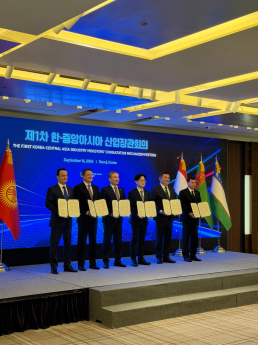
NC CPMRM Takes Part in the Meeting of the C5+1 Industry Ministers' Consultative Mechanism in Seoul
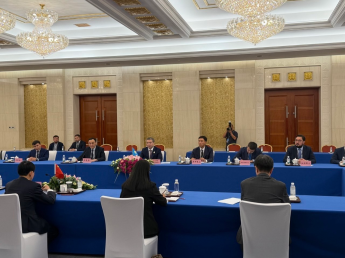
NC CPMRM Takes Part in China Mining 2026: New Horizons of Cooperation in the Mining and Metallurgical Complex
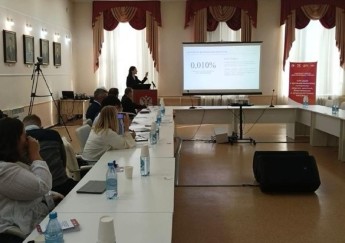
Young scientists from Kazakhstan presented research on critical mineral resources at an international conference