
Kazakhstan has taken an important step toward developing circular metallurgy: pilot samples of electrochemical zinc and composite coatings have been developed using zinc-containing sublimates formed during the electric smelting of refractory polymetallic raw materials from the Shalkiya deposit.
These samples were created by researchers at the National Center on Complex Processing of Mineral Raw Materials of the Republic of Kazakhstan (NC CPMRM RK) as part of the scientific and technical program "Development of Fundamentally New Technologies for the Complex Processing of Polymetallic Raw Materials for 2023-2025" funded by the Committee of Industry of the Ministry of Industry and Construction of the Republic of Kazakhstan.
As a result, optimal parameters were identified for leaching zinc sublimates in sulfuric acid solutions and extracting up to 70-80% of the zinc content. The zinc is then recovered by electrolysis, producing dense protective zinc coatings.
The following pilot samples of composite electrochemical coatings (CECs) were obtained:
• A zinc-titanium dioxide coating (Zn–TiO₂), the corrosion resistance of which is 3.4 times higher than that of a zinc coating alone; • An electrochemical zinc-copper alloy (48.80% Cu, 45.68% Zn), the corrosion resistance of which is 10 times higher than that of a zinc or copper coating alone.
Unlike traditional reactive salts (ZnSO₄ 7H₂O, ZnCl₂), sublimates contain up to 25-30% zinc and can serve as a valuable raw material for electrolytes. According to preliminary estimates, their use reduces the need for reactive zinc by approximately 40%, significantly reducing production costs and simultaneously reducing the accumulation of industrial waste.
Based on the results of this work, a process specification was developed for producing a composite electrochemical coating of zinc with titanium dioxide from solutions obtained after the sulfuric acid leaching of zinc-containing sublimates.
Four patents were issued:
- "Electrochemical Method for Producing Protective Zinc-Containing Composite Coatings on a Copper Surface" (No. 8876);
- "Method for Producing Zinc Sulfide" (No. 9968);
- "Method for Producing Composite Iron-Titanium Powder" (No. 8875);
- "Method for Extracting Zinc from Waste Solutions" (No. 10298).
Further implementation of this technology will:
- Reduce the cost of protective coatings;
- Reduce dependence on reactive zinc salts;
- Reduce the volume of industrial waste;
- Improve the environmental sustainability of metallurgical production.
Thus, this development demonstrates the successful transformation of metallurgical sublimates from a by-product of electric smelting into a high-tech raw material for the electrochemical industry.
As a reminder, the goal of the program "Development of Fundamentally New Technologies for the Integrated Processing of Polymetallic Raw Materials for 2023-2025" is the development and pilot testing of technologies for the integrated processing of refractory high-silicon polymetallic ores to produce new types of complex silicon alloys and composite lead- and zinc-containing materials. The program also includes the development of process regulations, technical specifications for new types of complex alloys, and process specifications for the design of new innovative production facilities.
Source: www.gov.kz
Other news
A scientific development from Kazakhstan received international recognition at the ERSGIT 2026 conference in China
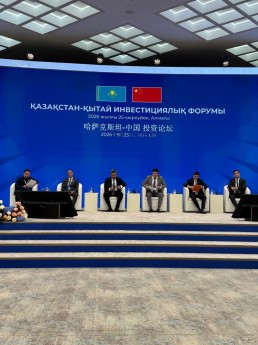
Industrial Cooperation Between Kazakhstan and China: From Raw Materials to High-Tech Production
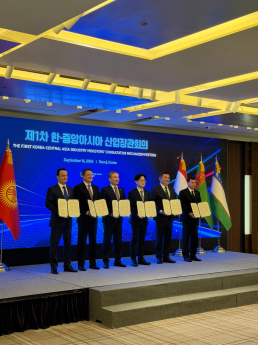
NC CPMRM Takes Part in the Meeting of the C5+1 Industry Ministers' Consultative Mechanism in Seoul
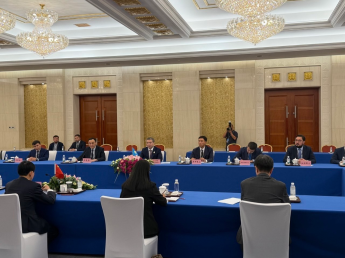
NC CPMRM Takes Part in China Mining 2026: New Horizons of Cooperation in the Mining and Metallurgical Complex
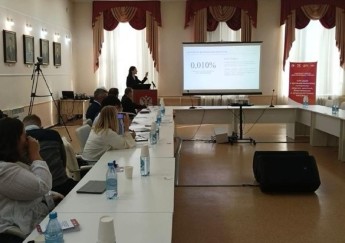
Young scientists from Kazakhstan presented research on critical mineral resources at an international conference