Scientists have created a unique silicon-carbon nanocomposite made from rice husks. DKNews.kz .
The development was carried out on the basis of the RSE "National Center for Integrated Processing of Mineral Raw Materials of the Republic of Kazakhstan" of the Committee of Industry of the Ministry of Agriculture of the Republic of Kazakhstan.
Rice husk is a waste product of rice production, the main food of a large part of the world's population. Accounting for 20% of the weight of rice, rice husk is a renewable raw material due to the presence of the most important elements – carbon and silicon.
Using the natural advantages of this material and at the same time aiming to eliminate the harmful effects of its multi-tonnage formations (rice husks are not susceptible to rotting like ordinary plant waste), scientists have developed a processing technology to produce a multifunctional silicon-carbon nanocomposite.
Silicon carbon nanocomposite works as a filler for rubber products and friction materials, raw materials for the production of silicon and ferroalloys. Its use is also possible in agriculture.
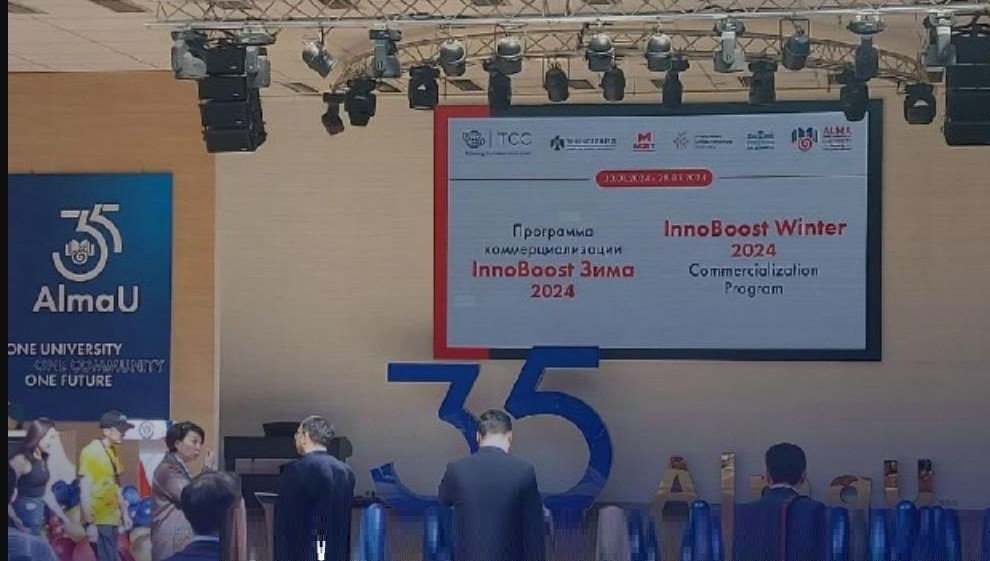
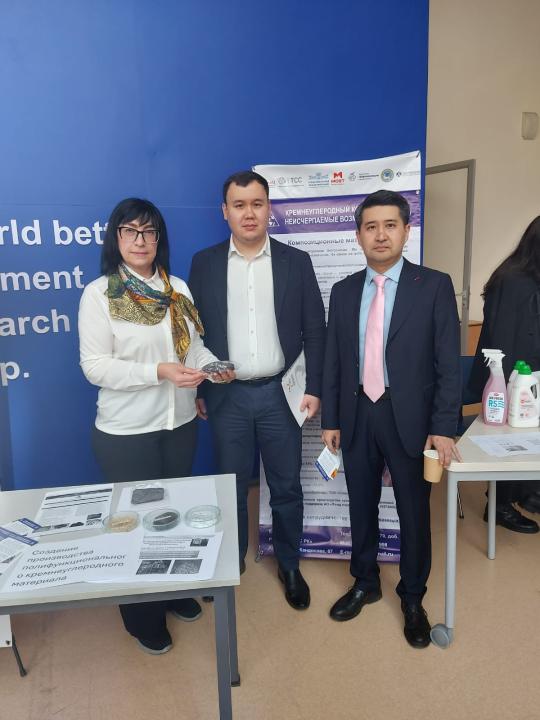
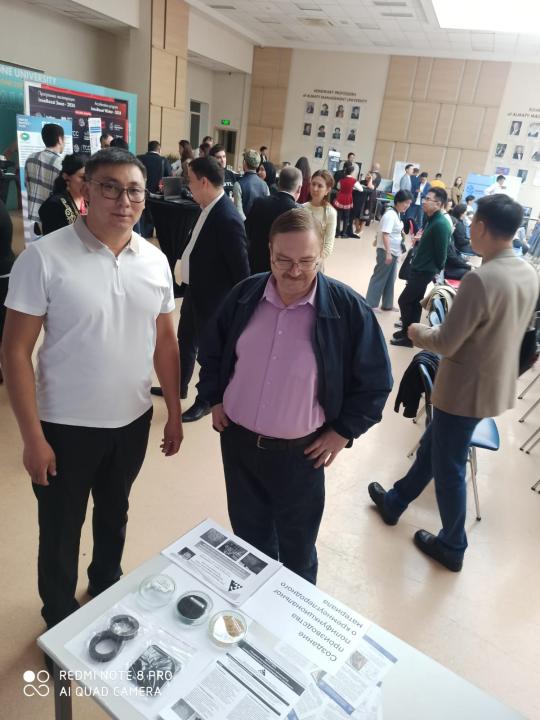
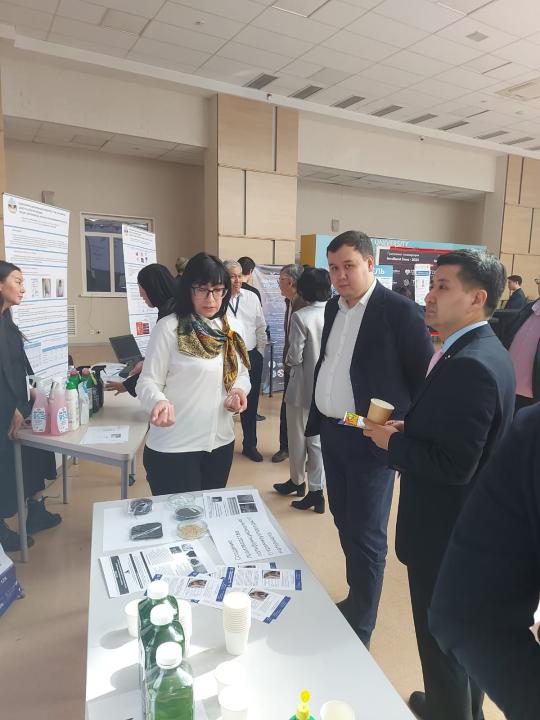
Scientists shared the subtleties of the technology of obtaining and inexhaustible possibilities of using a silicon–carbon product with the participants of the exhibition of projects under the Deep Tech Innoboost Winter-2024 Commercialization Program, which took place last week at AlmaU University (Almaty). The work aroused genuine interest, as Kamil Akatov, Chairman of the Management Board of JSC Science Foundation, noted in his response.
Source: dknews.kz
Other news
A scientific development from Kazakhstan received international recognition at the ERSGIT 2026 conference in China
Industrial Cooperation Between Kazakhstan and China: From Raw Materials to High-Tech Production
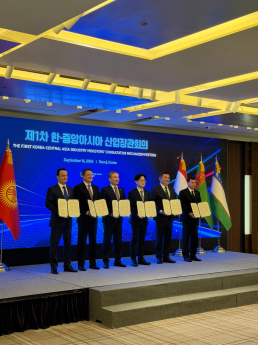
NC CPMRM Takes Part in the Meeting of the C5+1 Industry Ministers' Consultative Mechanism in Seoul
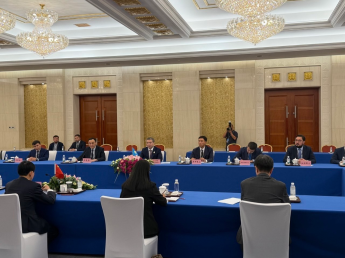
NC CPMRM Takes Part in China Mining 2026: New Horizons of Cooperation in the Mining and Metallurgical Complex
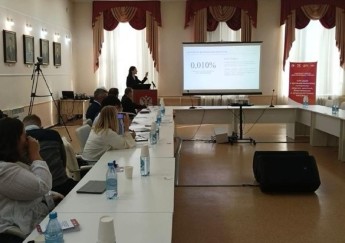
Young scientists from Kazakhstan presented research on critical mineral resources at an international conference