Kazakh scientists, in collaboration with their Russian colleagues, are researching ways to reduce the dangers of chromium waste.
Kazakh scientists, together with their Russian colleagues, are exploring ways to safely recycle chromium-containing industrial waste. The main goal is to reduce the environmental impact of such materials, control the formation of hexavalent chromium, and return valuable components to the production cycle, inbusiness.kz reports, citing the Ministry of Industry and Construction of the Republic of Kazakhstan.
"The work is related to enterprises in the chromium and ferroalloy industries, where significant volumes of man-made raw materials are generated. The search for safe processing technologies for these raw materials is becoming a key area of modern metallurgical science," noted the Kazakh Ministry of Industry and Construction.
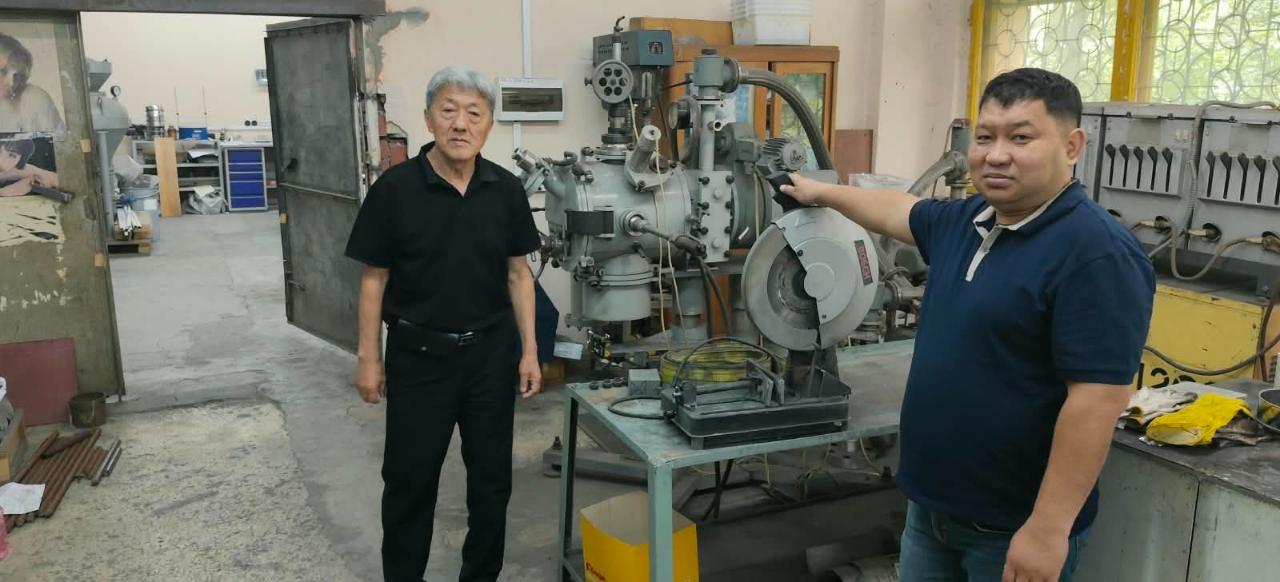
During a working visit to the Institute of Metallurgy of the Ural Branch of the Russian Academy of Sciences (IMET UB RAS) in Yekaterinburg, representatives of the Zh. Abishev Chemical-Metallurgical Institute, a branch of the National Center on Complex Processing of Mineral Raw Materials of the Republic of Kazakhstan, met with the staff of the steel and ferroalloys laboratory.
Following the talks, a joint working group was established. It includes Alexander Kim, Doctor of Engineering Sciences; Ruslan Sultangaziyev, PhD, Associate Professor; and Oleg Zayakin, Doctor of Engineering Sciences.
The first stage will be a detailed study of the composition and properties of industrial waste. The researchers will determine the forms of chromium in the materials and, based on the data obtained, select the most effective technological solutions. "Following the meeting, we defined a specific plan for joint work. The first stage will involve conducting a detailed study of the composition and properties of the waste, determining the forms of chromium, and, based on this, substantiating the most effective technological solutions aimed at reducing the impact of hexavalent chromium and recycling valuable waste components," noted working group member Alexander Kim.*
The research will cover waste from the Aktobe Chemical Plant and ferroalloy production in Kazakhstan. In addition, scientists will study materials from plants located in Pervouralsk and Novotroitsk.
"Particular attention will be paid to hexavalent chromium. Controlling its formation and reducing the environmental impact of chromium-containing waste are considered important conditions for reducing the potential environmental impact of industrial processes," the department reported.
The project's objective is not only to reduce environmental risks. The researchers intend to evaluate the possibility of extracting valuable components from the waste and subsequently returning them to production.
This approach is consistent with the principles of more rational use of raw materials: instead of the long-term accumulation of man-made materials, some of the components they contain can potentially be reused in the industrial cycle.
"In the long term, this could lead to a reduction in the volume of accumulated waste, a reduced environmental impact, and increased efficiency in the use of mineral resources," the ministry believes.*
This joint work will also allow the two research teams to combine their scientific expertise and experimental capabilities. This is particularly important for Kazakhstan, given the significant industrial potential of the chrome and ferroalloy industries and the need to implement more environmentally friendly technologies.
The collaboration between the Zh. Abishev Chemical-Metallurgical Institute and the IMET UB RAS creates the foundation for further research and the development of practical solutions for the processing of chromium-containing waste.
In the near future, specialists will focus on studying the composition of man-made raw materials and the behavior of the chromium they contain. The results of this research should determine which technologies will be most effective in reducing environmental hazards and reusing valuable components.
Source: inbusiness.kz
Other news
A scientific development from Kazakhstan received international recognition at the ERSGIT 2026 conference in China
Industrial Cooperation Between Kazakhstan and China: From Raw Materials to High-Tech Production
NC CPMRM Takes Part in the Meeting of the C5+1 Industry Ministers' Consultative Mechanism in Seoul
NC CPMRM Takes Part in China Mining 2026: New Horizons of Cooperation in the Mining and Metallurgical Complex
Young scientists from Kazakhstan presented research on critical mineral resources at an international conference